 (Image source: Gemini)
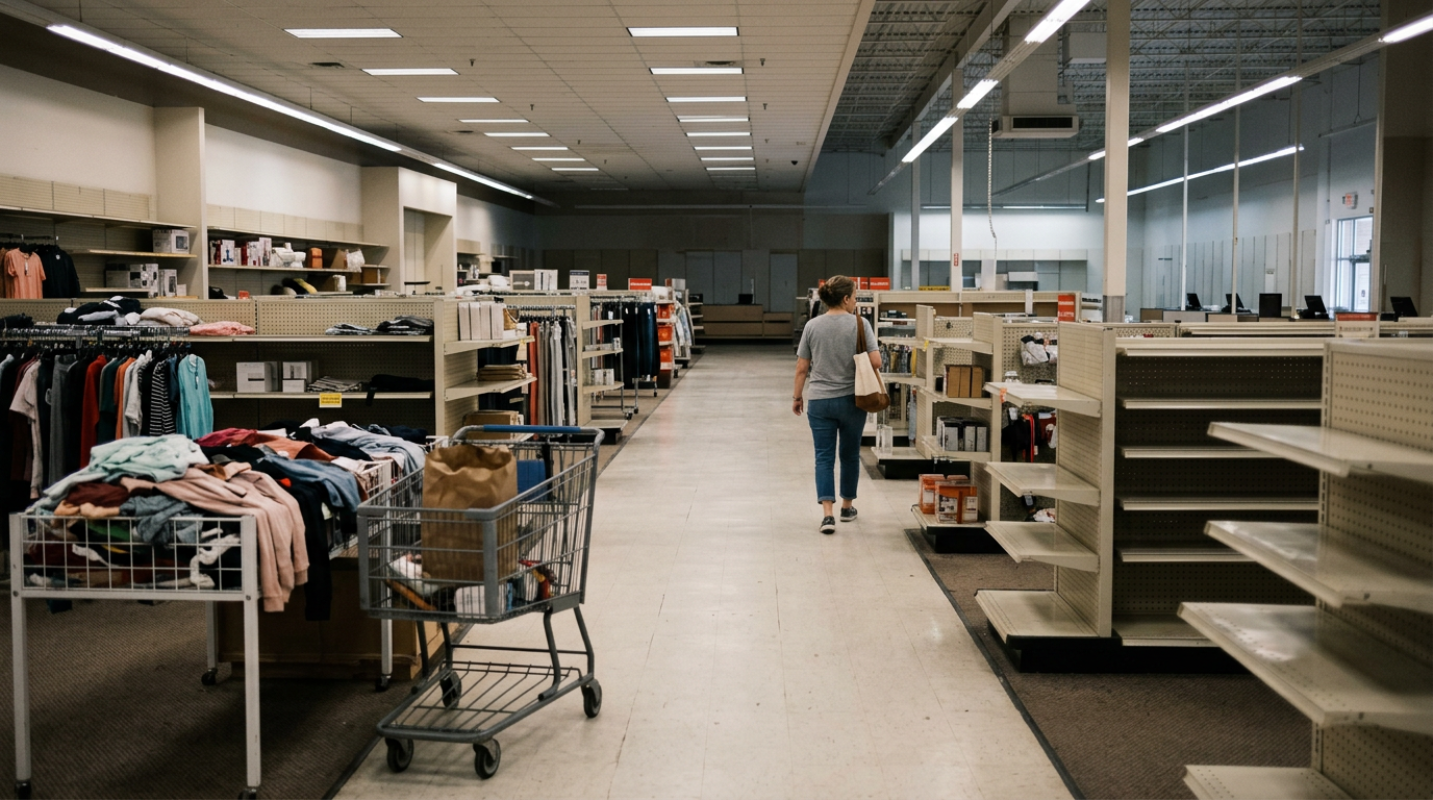
 The retail world is facing a reckoning that has been building for years. Although the giant box stores seem to be holding their ground and tiny boutiques are finding their fans on social media, the companies in the middle are falling apart. We're seeing a massive spike in bankruptcy filings that specifically targets mid-size retail chains. These are the brands you grew up with, the ones that occupy that awkward space between being a global powerhouse and a neighborhood favorite. In 2024 alone, we saw 48 major retail bankruptcies, which was a 41% jump from the year before.¹ By the time we hit the middle of 2025, the pace was even faster.
So what's actually happening here? Why is the "middle" of the market suddenly a dead zone? It's a mix of bad timing, expensive debt, and a consumer base that has completely changed how it spends money. If you've been wondering why your favorite hobby shop or clothing chain suddenly vanished, you're looking at the result of a financial squeeze that's been years in the making.
Mid-Size Retailers Are Vulnerable
Think of mid-size retailers like the middle child of the business world. They don't have the massive scale of a Walmart or an Amazon to bully suppliers into lower prices. At the same time, they're too big and burdened by physical stores to be as nimble as an online-only startup. They're trapped in a "dangerous middle ground" where they're being attacked from both sides.
The biggest weight around their necks right now is the end of cheap money. For over a decade, these companies survived by taking on debt at very low interest rates. When they needed more cash, they just refinanced. But with interest rates hitting 20-year highs recently, that game has ended. Servicing that debt has become twice as expensive for many of these chains, and they simply don't have the extra cash to keep up.
Then you have to look at your own wallet. Inflation hasn't just made eggs more expensive. It has changed how you prioritize your spending. Most mid-size retailers sell "discretionary" items. These are things you want but don't strictly need, like a new set of throw pillows or a specialized creating kit. When money gets tight, people trade down. They buy the store brand at a big-box retailer instead of the mid-tier brand they used to love.
The Perfect Storm of Operational and Economic Headwinds
Running a physical store has become a logistical nightmare over the last couple of years. Labor costs are up, utilities are more expensive, and shipping goods across the ocean costs a fortune compared to five years ago. For a company with 200 stores, these small increases add up to a massive drain on the bank account.
We're also seeing the "Retail Apocalypse" enter a much more dangerous phase. A few years ago, a struggling chain might close ten or twenty underperforming stores and keep going. Now, the problems are so deep that closing stores isn't enough. Instead of a "physical footprint reduction," we're seeing full-blown insolvency.
Refinancing has become nearly impossible for these mid-market players. The big banks and lenders are currently focused on the massive "maturity walls" of the billion-dollar companies. This effectively crowds out the smaller chains. When a mid-size retailer needs a loan to get through a slow season, they're finding the cupboard is bare. They're being forced into bankruptcy court not because they're totally broke, but because they can't find anyone to lend them the bridge cash they need to stay afloat.
Lessons from Recent Filings
If you want to see how this looks in the real world, look at the names that hit the headlines in late 2024 and throughout 2025. One of the most telling examples was Joann Fabric. They filed for bankruptcy in early 2025, and by May, they were in a full wind-down. They were carrying over $1 billion in debt at a time when people were spending less on hobbies.
Then you have the "Chapter 22" phenomenon. This is when a company files for Chapter 11, tries to fix things, fails, and has to file a second time. We saw this with Joann, Party City, and Rite Aid. It's a sign that cutting debt isn't enough if the underlying business model is broken. Rite Aid, like, finally headed toward full liquidation in late 2025 because they couldn't overcome shrinking pharmacy margins and massive legal liabilities.
- Big Lots: Filed in September 2024 because their lower-income customers pulled back on spending, and rent costs became unsustainable.
- Forever 21: Shuttered most U.S. stores in early 2025 as they lost the "fast fashion" war to ultra-cheap online giants like Shein and Temu.
- LL Flooring: Once a powerhouse, they went into liquidation in late 2024 because the housing market slowed down and nobody was buying new floors.
- The Container Store: Had to restructure in early 2025 because its debt load was too high and people stopped buying expensive organizational bins.²
The Turbulence and Survival Approaches for Retailers
If you're running a retail business right now, the name of the game is cash. It sounds simple, but many of these bankrupt chains were focused on growth or "digital transformation" while their actual cash reserves were drying up. The survivors are the ones who are obsessively managing their inventory. You can't afford to have millions of dollars in product sitting in a warehouse gathering dust.
Agility is the other key. The retailers that are still standing are the ones who can pivot their business models in weeks, not years. This means having a website that actually works and a physical store that offers something you can't get online. If your store is just a room full of shelves, you're already in trouble. You have to give people a reason to leave their house.
This article on results.autorating.co is for informational and educational purposes only. Readers are encouraged to consult qualified professionals and verify details with official sources before making decisions. This content does not constitute professional advice.